Product & portfolio work · Case study
Waymaker AI
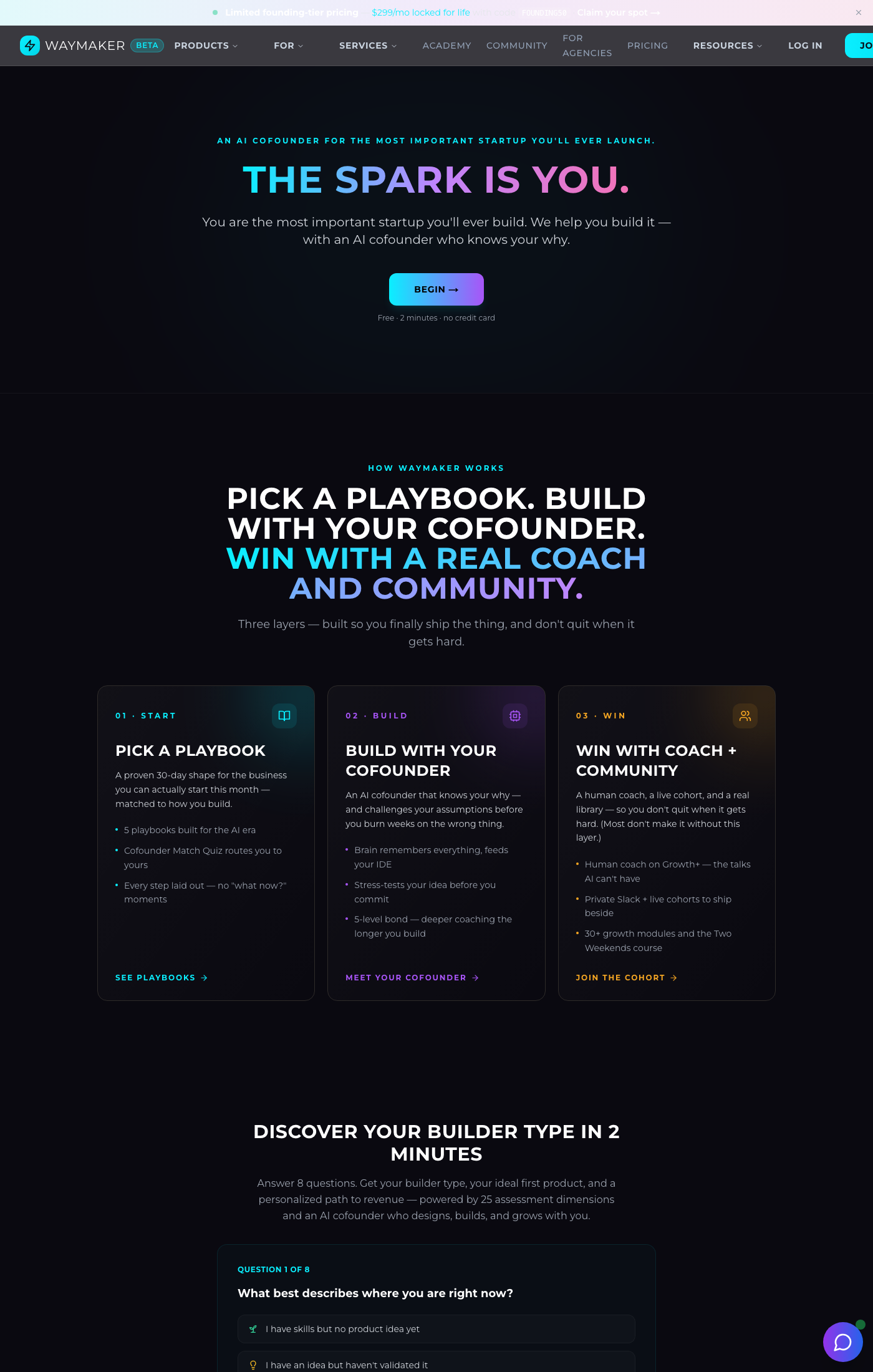
A connected platform that helps people move from an idea to a product, a plan, and the next useful action.
Explore the workBuild / Websites & Product Development
Bring strategy, design and implementation into one working process. Define the smallest useful version, connect the critical workflows and hand over a product your team can understand.
Start with one priority. Scope, fees and timing are agreed before the work begins.
THE WORK WE CAN SCOPE TOGETHER
Choose the work your goal needs. These are possible areas of support; your agreed package defines what is included.
KNOW WHAT PROGRESS LOOKS LIKE
We agree the measures around your starting point, scope and available data, so you know what to review after delivery.
The problem, the intended users, existing assets and any systems the product must connect to.
We’ll discuss fit and recommend a scope. You decide whether to move forward.HOW IT WORKS · STEP BY STEP
Bring the challenge in front of you. We’ll agree what is useful to deliver before the work begins.
A useful problem to solve
Identify the people, problem and user journey that matter first.
An agreed finish line
Agree the research, design or build scope and how it will be reviewed.
Work you can inspect
Create the agreed prototype, design or working experience and review it together.
A practical handoff
Check the agreed journey and document what the team needs to take it forward.
RELEVANT EXPERIENCE
Each example identifies its context: client work, prior career experience, a portfolio project or a concept.
A connected platform that helps people move from an idea to a product, a plan, and the next useful action.
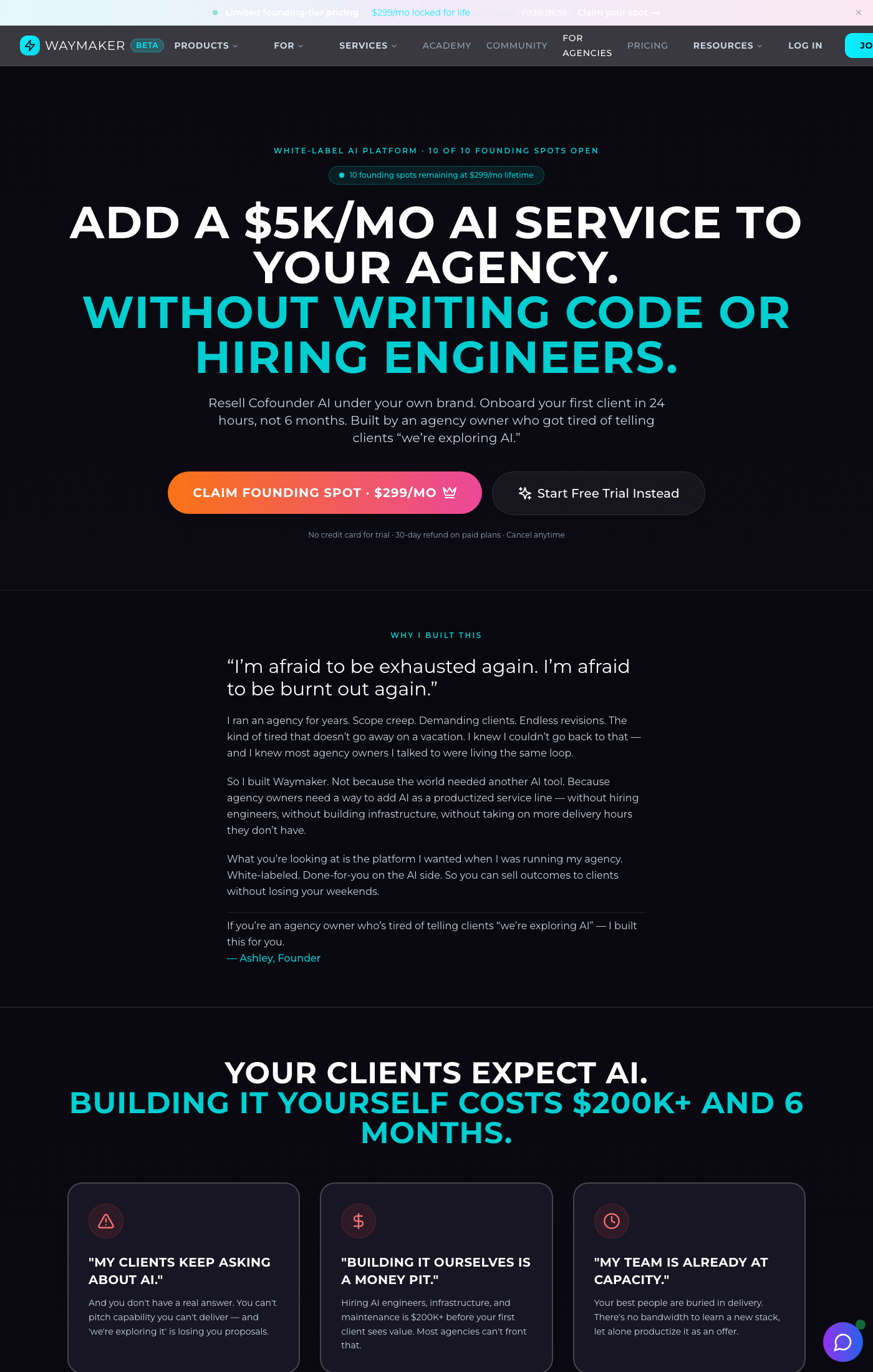
Explore the workWhite-label AI platform agencies use to deliver AI services to their clients without hiring engineers. Embedded Stripe checkout, founding-rate coupon flow, multi-tenant Postgres with RLS, magic-link onboarding.
Explore the workPractical AI training, templates and starter ideas for turning an existing skill into a useful service.
Explore the workA Christmas wishbook for grown-ups to gather gift ideas, plan surprises, and make a little family magic.
Explore the work