RESEARCH TO PRACTICE / NOVEMBER 14, 2026
Your customer journey breaks between teams: a five-step handoff audit
Follow one enquiry into delivery, expose the repeated work, and give the next action a clear owner before adding more automation.

An enquiry arrives through the website. Sales has a good conversation. The customer agrees to proceed. Then delivery asks the same questions again and discovers a promise that never made it into the brief.
This is a practical place to improve an existing business. The latest Outcome Driven research and scorecard examine why context and coordination deserve their own measures. The agency application is straightforward: make one customer journey continuous across the teams and tools that run it.
The service-business example below is fictional. It is an audit method you can adapt, not a claim about a client result.
1. Choose the transition that creates repeated work
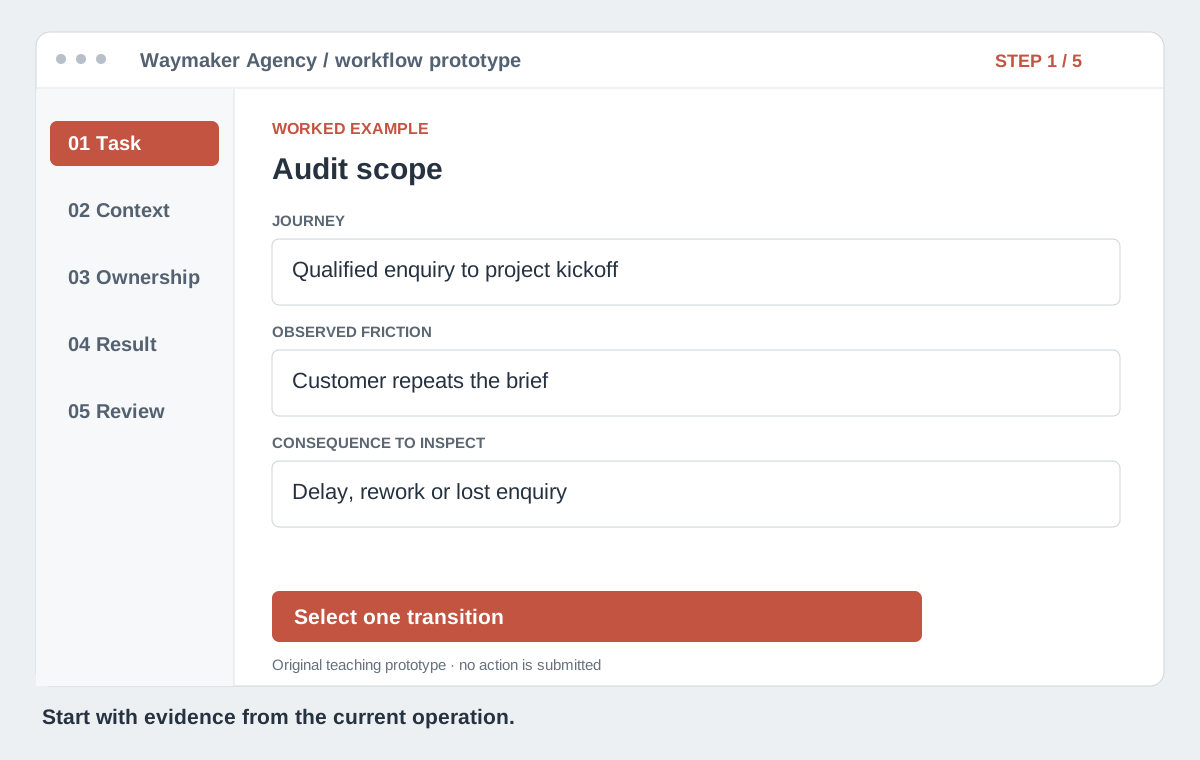
Pick one path, such as qualified enquiry to project kickoff. Review a consecutive set of recent cases you are authorized to inspect. Note what customers supplied, what they were promised and where someone had to ask again.
Look for a pattern with a business consequence: delayed starts, scope corrections, abandoned enquiries or extra delivery effort. Avoid starting with a new platform. First identify the information or responsibility that fails to cross the boundary.
2. Create a brief the receiving team can use
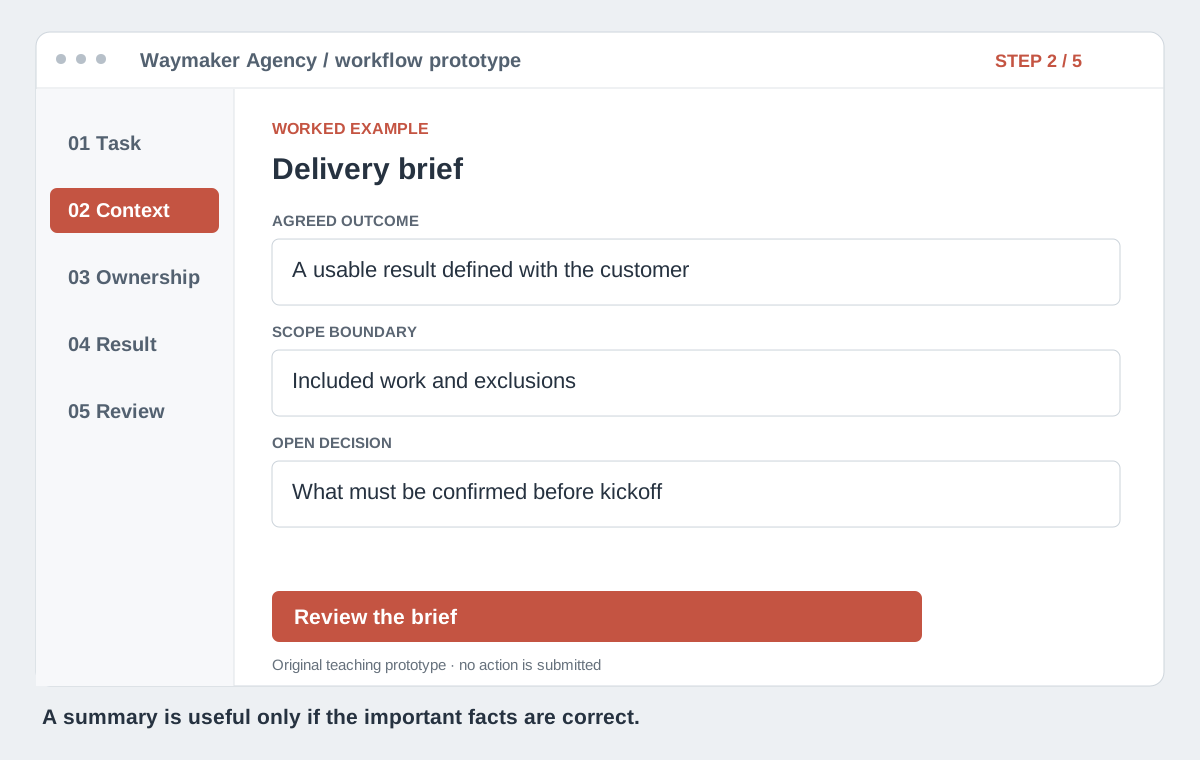
Include the customer’s desired outcome, agreed scope, exclusions, relevant evidence, promised next action and unresolved decisions. Name the source of consequential facts. Let the customer correct the parts that describe their needs.
A transcript can support the brief, but it should not replace it. The delivery team needs to find the agreed work without reading a long conversation. Keep access limited to the people who need the record and avoid transferring unrelated personal details.
3. Require acceptance by the next owner
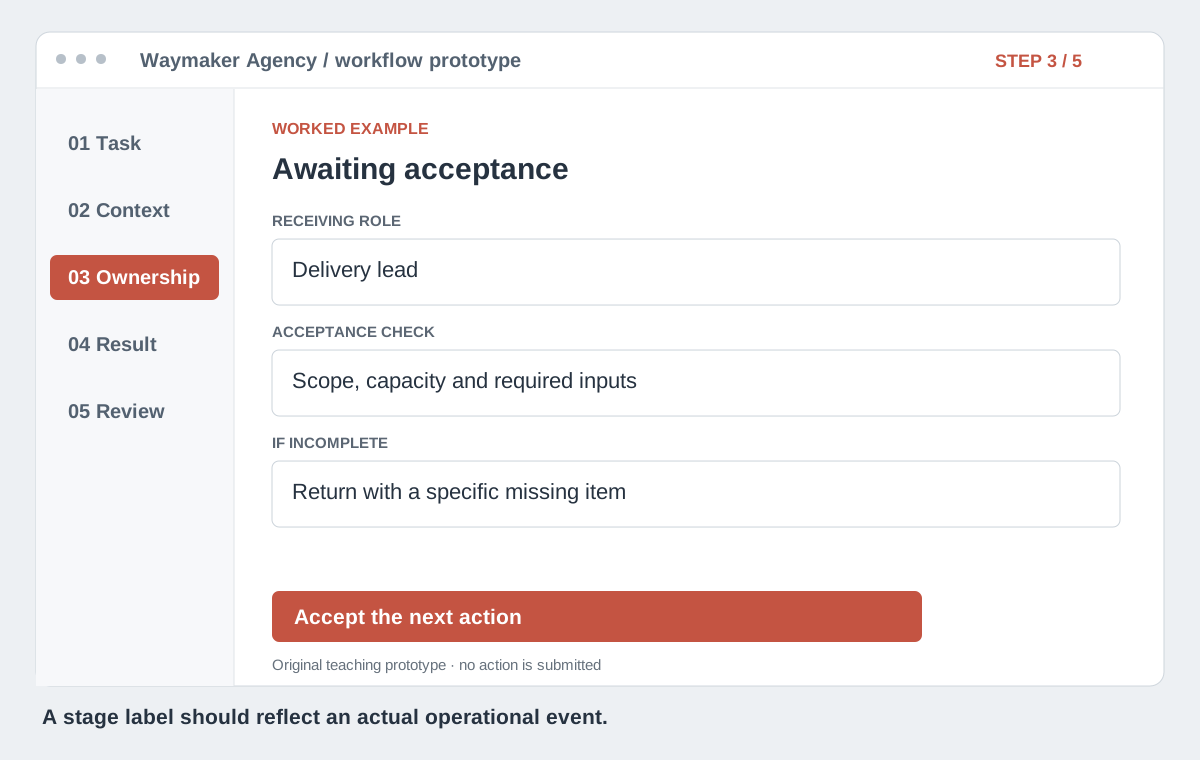
Assign a role responsible for checking the brief and accepting the next action. A CRM stage change alone does not establish that delivery has capacity or enough information to begin.
Show the customer the next step, responsible team and a realistic update expectation. Where acceptance fails, return the case with the missing information instead of letting it sit in an invisible queue. Use the same record so the history remains understandable.
4. Automate one supported part of the transfer
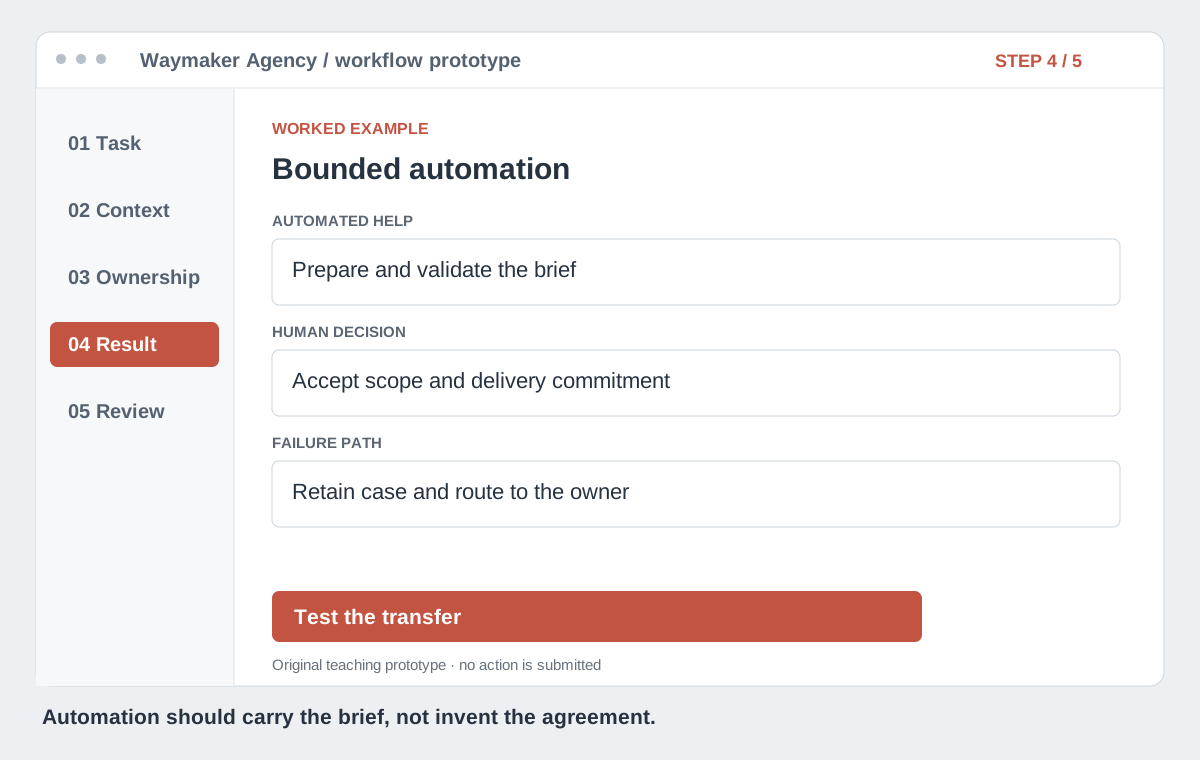
Once the manual handoff works, consider automation for drafting the brief, checking required fields or routing the case. Keep consequential commitments within agreed authority. An assistant must not invent delivery dates, prices or approvals.
Use documented integrations where they solve the task. Return a task reference, explicit state and recoverable error information. Preserve a human route when the integration fails. Do not replace a working form or service flow with an API simply to appear agent-ready.
5. Evaluate customer progress and delivery cost
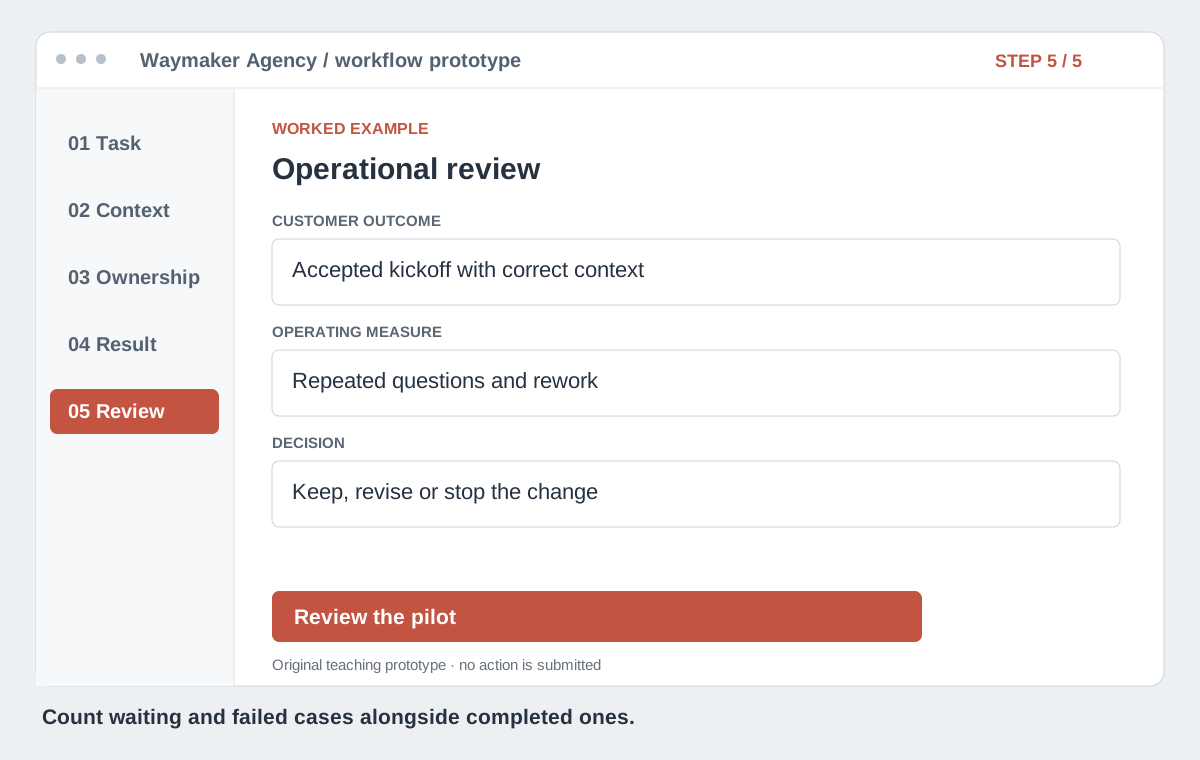
Compare accepted kickoffs per eligible agreed project, time to acceptance, repeated questions, scope corrections and delivery effort. Keep projects still waiting visible. Where possible, test the revised brief against the current method with comparable allocation and a defined review window.
For a small business, begin with a monitored pilot and case review. Document changes in staffing, project complexity and customer mix so you do not credit the new workflow for everything that changed. Decide whether to keep, revise or stop based on the complete journey.
What this means for websites and AI agents
The website remains the place where many customers check the promise, provide context and ask for help. Agents may begin or continue some of those tasks through supported interfaces. Both need the same reliable facts and truthful status.
Our guide to the web after AI agents explores that shift. Start here with one enquiry-to-delivery handoff, then use the UX result-contract walkthrough if your team needs to specify agent and API behavior.
Bring the current journey, a few sanitized examples and the decision you want to make to a free fit conversation. A focused improvement starts with a transition we can inspect and a result we can verify.